
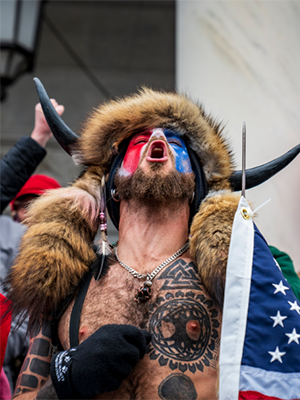
January 6, 2021.
A mob stormed the United States Capitol to stop Congress from certifying an election. They attacked police officers. They hunted for the Vice President and Speaker of the House. Five people died. 140 officers were injured. The president who told them to march on the Capitol later pardoned nearly all of them.
Depending on your politics and preferred source for news and information, your conclusion about what happened might be skewed in one direction or another. In any case, here’s how insurrection and sedition are addressed in the law.
What These Terms Actually Mean
Political debates deliberately muddle these definitions. The law is precise.
Treason (Article III, Section 3 of the Constitution):
“Treason against the United States, shall consist only in levying War against them, or in adhering to their Enemies, giving them Aid and Comfort.”
Conviction requires either testimony of two witnesses to the same overt act OR confession in open court. This is the only crime defined in the Constitution. The Founders set an impossibly high bar deliberately—the British Crown had used treason charges to silence dissent.
Only about 30 people have been convicted of treason in U.S. history. It requires a foreign enemy. January 6 was not treason. Anyone calling it treason is wrong.
Seditious Conspiracy (18 U.S.C. § 2384):
“If two or more persons…conspire to overthrow, put down, or to destroy by force the Government of the United States, or to levy war against them, or to oppose by force the authority thereof, or by force to prevent, hinder, or delay the execution of any law of the United States…”
Maximum penalty: 20 years in prison. The law doesn’t require success—conspiracy to attempt is enough. This is what members of the Proud Boys and Oath Keepers were convicted of.
Insurrection (18 U.S.C. § 2383):
“Whoever incites, sets on foot, assists, or engages in any rebellion or insurrection against the authority of the United States or the laws thereof, or gives aid or comfort thereto…”
Maximum penalty: 10 years in prison plus disqualification from holding federal office. Lower bar than treason (no foreign enemy required). Higher bar than riot (requires organized attempt to resist government authority).
14th Amendment, Section 3 (The Disqualification Clause):
“No person shall…hold any office…who, having previously taken an oath…to support the Constitution of the United States, shall have engaged in insurrection or rebellion against the same, or given aid or comfort to the enemies thereof.”
Enacted after the Civil War to bar Confederate officials from office. Can be overridden by two-thirds vote of Congress. Does not require criminal conviction—it’s about the act itself.
Where Does This Come From?
These laws were written or strengthened after the Civil War. The seditious conspiracy statute was passed in 1861 and is still in effect. The 14th Amendment’s Section 3 was ratified in 1868, aimed specifically at preventing Confederate officials from returning to power.
The Founders and Reconstruction Congress knew what insurrection looked like. They wrote laws to address it. Then those laws sat mostly unused for over a century.
Seditious conspiracy is rarely charged. Before January 6, the most notable modern cases were the 1995 Oklahoma City bombing accomplices and Omar Abdel-Rahman (the “Blind Sheikh”) for the 1993 World Trade Center bombing. In 2010, nine members of the Hutaree militia were charged; all were acquitted or had charges dropped. The government sets a high bar for seditious conspiracy. It has to prove actual conspiracy to use force against the government, not just angry rhetoric.
The Alien and Sedition Acts of 1798 criminalized criticism of the government. Thomas Jefferson and James Madison opposed them as unconstitutional. The Sedition Act expired in 1801 and is widely condemned as one of the worst violations of free speech in American history. Modern sedition laws require actual conspiracy to use force, not just speech.
January 6, 2021—What Actually Happened
The facts are documented through thousands of hours of video footage, social media posts, encrypted communications, and testimony under oath.
The Setup:
Donald Trump lost the 2020 election by 7 million votes in the popular vote and 306-232 in the Electoral College. He claimed widespread fraud. He filed more than 60 lawsuits challenging results. He lost nearly all of them. His own Attorney General, William Barr, told him there was no evidence of fraud sufficient to change the outcome.
Trump called for “Stop the Steal” rallies on January 6, the day Congress would certify the Electoral College results. At a rally near the White House, Trump told thousands of supporters: “We fight like hell. And if you don’t fight like hell, you’re not going to have a country anymore.” He told them to march to the Capitol. Secret Service had removed magnetometers so armed attendees could enter the rally area.
The Prosecutions—What Courts Decided
The Justice Department conducted one of the largest criminal investigations in American history. More than 1,500 people were charged. More than 600 were convicted of assaulting or obstructing police officers. More than 170 were convicted of using a deadly or dangerous weapon. Several dozen were convicted of seditious conspiracy.
The Oath Keepers (November 2022):
Stewart Rhodes, founder of the Oath Keepers militia, and four other members were convicted of seditious conspiracy. Evidence presented at trial included encrypted chats showing they planned to stop the transfer of power by force. They stockpiled weapons at a hotel in Virginia, calling it their “Quick Reaction Force.” Rhodes sent messages saying, “We aren’t getting through this without a civil war.”
Rhodes was sentenced to 18 years in federal prison. The other four received sentences ranging from 12 to 18 years.
The Proud Boys (May 2023):
Enrique Tarrio, leader of the Proud Boys, and four other members were convicted of seditious conspiracy. Tarrio wasn’t even at the Capitol on January 6—he was in jail in Baltimore for burning a Black Lives Matter banner. But evidence showed he organized and directed the attack from outside. Messages recovered by investigators showed the Proud Boys planned to “storm the Capitol.”
Tarrio was sentenced to 22 years in federal prison, the longest sentence of any January 6 defendant. The others received sentences between 15 and 18 years.
Evidence from the trials included messages like “Make them riot” sent before January 6, and “You are executing the President’s orders” sent during the attack. Prosecutors presented detailed evidence of coordination between the groups and planning to obstruct the certification.
What the judges said:
Judge Amit Mehta, sentencing Stewart Rhodes: “The nature of the constitutional moment we were in is clear…you, sir, present an ongoing threat and a peril to this country, to the republic and to the fabric of our democracy.”
Judge Timothy Kelly, sentencing Enrique Tarrio: “The amount of evidence” showing planning “is just overwhelming…It’s not a protest. It’s not a demonstration. It’s not civil disobedience. It’s not resistance. It’s a crime.”
The 14th Amendment Cases—Disqualification from Office
Colorado, Maine, and Illinois attempted to remove Donald Trump from their presidential primary ballots under Section 3 of the 14th Amendment, which bars anyone who engaged in insurrection from holding federal office.
State courts heard evidence about January 6. The Colorado Supreme Court ruled 4-3 that Trump had engaged in insurrection and was constitutionally disqualified from office.
The U.S. Supreme Court reversed unanimously in March 2024. The Court held that states cannot enforce Section 3 against federal candidates—only Congress can, and Congress would need to pass implementing legislation first. The Court did not rule on whether Trump engaged in insurrection. It avoided the merits entirely.
The result: Section 3 of the 14th Amendment is effectively unenforceable. Congress won’t pass enforcement legislation because it’s controlled by the party that benefits from not enforcing it.
The Pardons—Erasing Accountability
On January 20, 2025, his first day back in office, President Trump pardoned approximately 1,500 people convicted of crimes related to January 6. He granted full pardons to most defendants and commuted sentences to time served for 14 leaders of the Oath Keepers and Proud Boys.
Trump called the January 6 defendants “hostages” and “patriots.” He said they had been “treated very unfairly.” When reporters asked whether he had reviewed individual cases before issuing blanket pardons, Trump said: “It would be very, very cumbersome to go and look—you know how many people we’re talking about? 1,500 people.”
At least 33 pardoned January 6 defendants have been rearrested since January 6, 2021. Six have been charged with child sex crimes. Five have been charged with illegal weapons possession. Four have reoffended since receiving their pardons in January 2025.
Why Does This Matter?
The message to law enforcement:
The Fraternal Order of Police—which endorsed Trump—released a statement condemning the pardons. They said the pardons “send a dangerous message that the consequences for attacking law enforcement are not severe.”
January 6 was one of the largest mass assaults on police officers in American history. More than 140 officers were injured defending Congress. The officers who defended democracy received no justice. The people who attacked them received pardons.
The constitutional crisis:
If attempting to violently stop Congress from certifying an election isn’t insurrection, what is? If conspiring to prevent the peaceful transfer of power by force isn’t seditious conspiracy, what is?
Federal courts said it was. Juries heard the evidence and convicted. Federal judges—including judges appointed by Trump—sentenced defendants to years in prison. The president erased all of it.
The legal system worked. Investigations were thorough. Trials were fair. Defendants had lawyers, presented evidence, and appealed. Then the president used his pardon power to nullify the entire process.
What Would We Lose?
If seditious conspiracy and insurrection laws aren’t enforced—if convictions can be erased by presidential pardon—then these laws mean nothing. Anyone can attempt to violently overturn election results. As long as their side eventually wins politically, they face no consequences.
The January 6 precedent becomes the template: Lose an election, claim fraud, organize violent resistance, and if you regain power, pardon everyone involved.
Some argue that January 6 was a protest that got out of hand. That most people there were peaceful. That calling it insurrection is hyperbole. The courts heard these arguments. They reviewed thousands of hours of video footage. They examined encrypted messages showing planning and coordination. Juries deliberated and convicted.
These weren’t show trials. Defendants had experienced lawyers. They presented their own evidence and witnesses. They appealed their convictions. Every layer of the legal system reviewed the evidence and upheld the convictions. Then the president pardoned them anyway.
The question isn’t whether some people at the Capitol were just there to protest peacefully. The question is whether the organized groups who planned to stop the certification by force committed seditious conspiracy. Federal juries said yes.
What We Actually Have
The most serious domestic attack on the constitutional order since the Civil War. Followed by one of the most serious misuses of the pardon power since Andrew Johnson pardoned Confederate insurrectionists. Followed by one of the insurrectionists becoming president again and pardoning the others.
Seditious conspiracy has a legal definition. Federal prosecutors proved it in court. Juries convicted. Judges sentenced. The president pardoned them all.
The Constitution bars insurrectionists from holding office. The Supreme Court ruled that provision is unenforceable without congressional action. Congress won’t act.
(See also: Presidential Pardons, Chapter 12; Separation of Powers, Chapter 13; Habeas Corpus, Chapter 9)

