
Who Gets Mercy and Why It Matters
A presidential pardon is the power to forgive a federal crime and eliminate its legal consequences. When the president pardons someone, the conviction is wiped clean—they’re treated as if they were never convicted. A pardon restores civil rights like voting and gun ownership. It can be granted before or after conviction, and even before charges are filed (a “preemptive pardon”).
A related power is commutation, which reduces a sentence but doesn’t erase the conviction. Someone with a commuted sentence gets out of prison early but remains a convicted felon.
The pardon power is nearly absolute. The president can pardon anyone for any federal crime (except impeachment), without needing approval from Congress, courts, or anyone else.
Where Is It in the Constitution?
Article II, Section 2, Clause 1 states: “[The President] shall have Power to grant Reprieves and Pardons for Offenses against the United States, except in Cases of Impeachment.”
That’s it. No conditions. No limitations except impeachment. The Supreme Court has called this power “plenary”—complete and unqualified. In Ex parte Garland (1866), the Court ruled that the pardon power “extends to every offense known to the law, and may be exercised at any time after its commission.”
Where Does This Come From?
The pardon power comes from English kings, who held the “royal prerogative of mercy.” The Founders debated whether to give this power to the president. Some feared it would be abused—that presidents would pardon political allies or use it corruptly.
Alexander Hamilton defended it in Federalist No. 74, arguing that in cases of “insurrection or rebellion, there are often critical moments when a well-timed offer of pardon to the insurgents or rebels may restore the tranquility of the commonwealth.” He believed the power needed to rest with one person who could act quickly, not a legislature that might debate endlessly.
The Founders included only one limit: The president cannot pardon impeachment. This means Congress’s power to remove officials can’t be undone by a president.
Historically, presidents used pardons for national reconciliation. George Washington pardoned participants in the Whiskey Rebellion. Andrew Johnson pardoned tens of thousands of Confederates after the Civil War. Gerald Ford pardoned Richard Nixon “for all offenses against the United States.” Jimmy Carter pardoned over 200,000 Vietnam draft dodgers on his first day in office.
Trump’s Mass Pardons
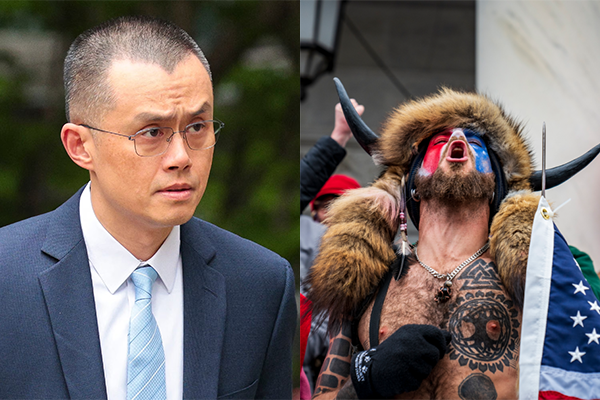
On January 20, 2025—his first day in office—Trump issued a blanket pardon for nearly everyone charged in connection with the January 6, 2021, Capitol attack. Approximately 1,500-1,600 people received full pardons, while 14 leaders of the Oath Keepers and Proud Boys had their sentences commuted to time served.
The pardoned defendants included people convicted of seditious conspiracy—conspiring to overthrow the government or prevent execution of U.S. law. More than 600 rioters had been convicted of or pleaded guilty to assault of or obstructing law enforcement officers, and 170 of using a deadly weapon.
Dozens of pardoned January 6 defendants had prior criminal convictions for charges including rape, manslaughter, domestic violence, and drug trafficking. At least 33 pardoned insurrectionists have been rearrested, charged, or sentenced for other crimes since January 6, 2021. Six are charged with child sex crimes. At least five were charged with illegal weapons possession. Four have allegedly reoffended since receiving their pardons.
Trump called the defendants “hostages” and “patriots.” He claimed they’d been treated unfairly. When asked about reviewing cases individually, Trump told Fox News: “It would be very, very cumbersome to go and look—you know how many people we’re talking about? 1,500 people”.
On November 9, 2025, Trump issued another mass pardon for 77 people involved in the “fake electors” scheme, including Rudy Giuliani, Mark Meadows, Sidney Powell, Jenna Ellis, Kenneth Chesebro, and John Eastman. Since none faced federal charges at the time, the pardon was symbolic.
In December 2025, Trump pardoned Juan Orlando Hernández, the former president of Honduras who was convicted by an American jury of conspiring to import cocaine into the United States and sentenced to 45 years behind bars. Trump claimed Hernández was “treated very harshly and unfairly.”
The irony was impossible to miss: Trump simultaneously ordered military strikes against alleged drug trafficking “boats” in the Caribbean while pardoning a convicted drug trafficker who helped move hundreds of tons of cocaine into the United States.
The Demographics of Trump’s Pardons
According to a report by Rep. Ayanna Pressley, 85% of people granted federal pardons or clemency by Trump in 2025 are white. Five percent are Latino and 8% are Black. This compares to the federal prison population, which is 25% white, 36% Hispanic, and 34% Black.
January 6 defendants collectively make up 90% of the more than 1,700 people granted pardons or clemency since January 20, 2025. Just nine clemency actions benefited people convicted of drug offenses, out of more than 60,000 people in federal prison for such crimes.
The pattern is clear: Trump used his pardon power almost exclusively to benefit political allies and supporters—specifically, people who attacked the Capitol to try to keep him in power.
The Historical Contrast
Past presidents used mass pardons for national healing after divisive conflicts:
- George Washington pardoned Whiskey Rebellion participants to restore peace
- Andrew Johnson pardoned Confederates to reunite the country after Civil War
- Jimmy Carter pardoned Vietnam draft dodgers to heal from an unpopular war
Trump’s mass pardons serve a different purpose. They reward people who committed violence on his behalf. They send a message: If you attack democracy in Trump’s name, he will protect you from consequences.
Past presidents quietly granted thousands of pardons. Trump’s raw numbers aren’t historically unusual. What’s unprecedented is using mass pardons to absolve political allies rather than heal national divisions.
Why Does It Matter?
The pardon power exists for mercy—to correct injustices, show compassion, and promote national healing. When used for those purposes, it serves an important function in a justice system that can be harsh and unforgiving.
But Trump’s pardons demonstrate how easily the power can be abused. When a president pardons people who committed crimes on his behalf, pardons become rewards for loyalty rather than acts of mercy. When a president pardons people who tried to overthrow the government, it signals that attacking democracy carries no consequences if your side wins.
The January 6 pardons are particularly dangerous because they eliminate accountability for a violent attempt to prevent the peaceful transfer of power. The attack injured more than 140 police officers in one of the largest-ever mass attacks on law enforcement in U.S. history. The Justice Department spent four years investigating and prosecuting participants. Federal judges—including Trump appointees—sentenced defendants based on the severity of their crimes and their criminal histories.
Trump erased all of it with one signature.
The message to law enforcement is devastating. The Fraternal Order of Police and International Association of Chiefs of Police—both groups that endorsed Trump—condemned the mass pardons, saying they “send a dangerous message that the consequences for attacking law enforcement are not severe.”
The message to future insurrectionists is equally clear: Attack the Capitol, assault police officers, try to overturn elections—if your side wins, you’ll be pardoned.
What Would We Lose?
If we limited the pardon power—requiring congressional approval, for instance, or prohibiting pardons of co-conspirators—we’d lose flexibility. Mercy sometimes requires quick action. National reconciliation sometimes requires bold gestures. A president facing an unjust prosecution might need the pardon power for self-defense.
But what we’re losing now is any norm or expectation that pardons serve justice rather than personal interest. The Founders gave presidents this power believing it would be used sparingly and wisely. They counted on presidents feeling constrained by tradition, public opinion, and a sense of duty to the office.
Trump’s pardons show what happens when those constraints disappear. When a president uses pardons to protect people who committed crimes on his behalf, when he pardons en masse without reviewing individual cases, when he treats the power as a personal tool rather than a public trust, the Constitution’s check on the pardon power—that it can’t be used in impeachment cases—proves inadequate.
The pardon power is nearly unlimited. The only real constraint is the president’s conscience and fear of political consequences. When a president has neither, the power becomes what the Founders’ critics feared: a tool for rewarding allies, protecting co-conspirators, and eliminating accountability for anyone who serves the president’s interests.


Leave a Reply