
Impeachment & the 25th Amendment
The Constitution provides two ways to remove a president who shouldn’t be president. Impeachment removes a president who commits “high crimes and misdemeanors.” The 25th Amendment removes a president who’s physically or mentally unable to do the job.
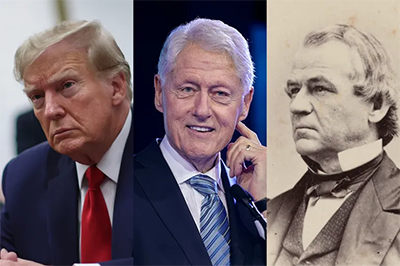
Donald Trump was impeached twice. Convicted of nothing. He incited an insurrection, was impeached for it, and Senate Republicans voted to acquit because—in Mitch McConnell’s own words after voting to acquit—”he’s out of office now” and the voters could handle it. Then the voters elected him again.
The 25th Amendment requires the vice president and cabinet to declare the president unable to serve. Trump’s cabinet? People who owe their jobs to him. No vice president is going to end their own political career by declaring the president incompetent.
What the Constitution Says
Article II, Section 4 – Impeachment:
“The President, Vice President and all civil Officers of the United States, shall be removed from Office on Impeachment for, and Conviction of, Treason, Bribery, or other high Crimes and Misdemeanors.”
How it works:
- The House of Representatives impeaches (simple majority vote – acts like a grand jury bringing charges)
- The Senate holds a trial (2/3 vote required to convict and remove)
- The Chief Justice of the Supreme Court presides over presidential impeachment trials
- If convicted, the president is removed from office and can be barred from holding future office
25th Amendment, Section 4:
If the vice president and a majority of the cabinet (or another body Congress designates) declare in writing that the president is “unable to discharge the powers and duties of his office,” the vice president immediately becomes acting president.
If the president disputes this declaration, Congress decides: Two-thirds of both houses are required to keep the vice president as acting president. Otherwise, the president resumes power.
Where This Comes From
Impeachment – British origins:
The English Parliament impeached officials as a check on the Crown. Colonial governors were impeached in the colonies. The Founders wanted a mechanism to remove corrupt officials without resorting to violence or revolution.
At the Constitutional Convention, delegates debated how to remove a president who abused power. Initially, they considered making the president removable by Congress through a simple vote. They changed it to impeachment to maintain separation of powers—Congress couldn’t simply vote out a president they disagreed with.
“High crimes and misdemeanors” doesn’t mean only criminal acts. It means serious abuses of power, betrayals of public trust, and conduct that undermines the office. The phrase comes from English law and covers official misconduct even if not technically illegal.
Benjamin Franklin explained why impeachment was necessary: “What was the practice before this in cases where the chief Magistrate rendered himself obnoxious? Why, recourse was had to assassination.” Without impeachment, Franklin argued, the only way to remove a dangerous president would be to kill him.
The 25th Amendment – Added in 1967:
The 25th Amendment was ratified in 1967, prompted by President Kennedy’s assassination. Before this amendment, the Constitution didn’t clearly address what happened if a president became incapacitated but didn’t die or resign.
Precedents that showed the need:
- President Woodrow Wilson had a severe stroke in 1919. His wife Edith essentially ran the government for the rest of his term, deciding which matters reached him. No one could remove him.
- President Eisenhower had a heart attack in 1955 and a stroke in 1957. Vice President Nixon informally took over some duties, but there was no clear constitutional authority.
- What if a president fell into a coma? Went insane? Became senile? The Constitution was silent.
The 25th Amendment clarified the process: If the president can’t serve, the vice president becomes acting president. If the president disputes this, Congress decides.
Trump’s Two Impeachments
First Impeachment (2019-2020) – Ukraine:
Charges: Abuse of power and obstruction of Congress.
Trump withheld military aid to Ukraine to pressure President Zelensky to announce an investigation into Joe Biden and his son Hunter. The aid was congressionally appropriated—Trump couldn’t legally withhold it. He used it as leverage for personal political benefit.
The House impeached Trump on December 18, 2019, largely along party lines. The Senate trial concluded on February 5, 2020. The Senate voted 52-48 to acquit on abuse of power and 53-47 to acquit on obstruction of Congress. Only one Republican senator, Mitt Romney, voted guilty on one count.
Trump was not removed from office.
Second Impeachment (2021) – January 6:
Charge: Incitement of insurrection.
On January 6, 2021, Trump held a rally near the White House. He told supporters to march to the Capitol and “fight like hell” to stop the certification of the election. A mob stormed the Capitol, attacked police officers, and attempted to prevent Congress from certifying the Electoral College results. Five people died. 140 officers were injured.
The House impeached Trump on January 13, 2021, one week before his term ended. The vote was 232-197. Ten Republicans joined Democrats in voting to impeach.
The Senate trial was held in February 2021, after Trump left office. The Senate voted 57-43 to convict. Seven Republicans voted guilty (Richard Burr, Bill Cassidy, Susan Collins, Lisa Murkowski, Mitt Romney, Ben Sasse, and Pat Toomey). This was short of the two-thirds (67 votes) needed to convict.
Trump was not convicted. He was not barred from holding future office.
Mitch McConnell’s speech:
Senate Minority Leader Mitch McConnell voted to acquit Trump. Then he gave a speech on the Senate floor:
“There is no question that President Trump is practically and morally responsible for provoking the events of that day. The people who stormed this building believed they were acting on the wishes and instructions of their president.”
McConnell argued Trump couldn’t be convicted because he’d already left office. The problem: McConnell, as Majority Leader when the House impeached Trump, had delayed the Senate trial until after Trump left office. He created the excuse for acquittal, then used it to vote not guilty.
Why Impeachment Fails
Partisanship over Constitution:
Impeachment requires a two-thirds Senate vote to convict—67 senators. In the current political environment, this is functionally impossible unless the president’s own party turns against them. And parties don’t turn against their own.
Senators face a choice: Vote to convict a president from your party and face primary challenges, loss of party support, and attacks from the president’s supporters. Or vote to acquit and face no consequences.
Most choose acquittal.
Lindsey Graham, after voting to acquit Trump for inciting insurrection, called the impeachment trial “a waste of time.” Translation: Even if the president incites an insurrection, his party won’t convict him.
The timing problem:
Impeachment takes time. The House must investigate, draft articles, hold hearings, and vote. The Senate must hold a trial with witnesses and deliberation. By the time the process finishes, the president’s term may be nearly over.
McConnell’s argument—”he’s already out of office”—creates a perverse incentive: Delay the trial until the president leaves, then claim you can’t convict someone who’s no longer in office. This makes impeachment useless in a president’s final months.
No consequences for acquittal:
Senators take an oath to support the Constitution. When they vote to acquit a president who clearly committed impeachable offenses, they face no penalty. The only enforcement mechanism is voters—who may reward senators for party loyalty rather than punish them for violating their constitutional duty.
The 25th Amendment—Never Used
Section 4 of the 25th Amendment has never been invoked to remove a president. Here’s why it won’t be:
The cabinet problem:
Cabinet members serve at the president’s pleasure. The president can fire them at any time. Invoking the 25th Amendment against the president means ending your own job and political career.
No cabinet member will risk this unless the president is so obviously incapacitated that not invoking it would be indefensible. And even then, the political cost is enormous.
The vice president problem:
The vice president must lead the effort to invoke the 25th Amendment. Doing so destroys the VP’s relationship with the president and potentially ends the VP’s political future.
Vice presidents are chosen for loyalty. They owe their position entirely to the president. They have presidential ambitions that depend on the president’s support. No VP will invoke the 25th Amendment unless the president is literally unconscious.
After January 6:
Multiple reports indicated that Trump cabinet members discussed invoking the 25th Amendment after the Capitol attack. Education Secretary Betsy DeVos resigned instead. Transportation Secretary Elaine Chao resigned. Others discussed it privately but did nothing.
Why? Because invoking the 25th Amendment would mean admitting they’d chosen an incompetent or dangerous person as president. It would mean political suicide. It would mean the end of their careers.
They chose to do nothing.
The hypothetical:
What if Trump suffered a stroke and was clearly incapacitated? What if he showed obvious signs of dementia? What if he had a mental break?
History suggests the cabinet and vice president would work around it. They’d hide it, like Edith Wilson did. They’d make excuses. They’d claim he was fine. They’d let staff run things while pretending the president was in charge.
Invoking the 25th Amendment requires admitting the truth. It’s easier to lie.
Why This Matters
Benjamin Franklin warned that without impeachment, the only way to remove a president would be assassination. He was right—but he assumed impeachment would work.
What happens when it doesn’t?
If the president can’t be removed for wrongdoing or incapacity, there’s no check on presidential power between elections. The president becomes effectively a monarch with a four-year term.
“Let the voters decide” was McConnell’s argument for not convicting Trump. But what if the president subverts elections? What if they refuse to leave office? What if they become incapacitated but won’t resign? Waiting for the next election isn’t a solution when the president is actively undermining the system.
The Constitution assumed good faith. Impeachment works if senators put Constitution over party. The 25th Amendment works if the cabinet puts the country over their careers. Both assume people will do the right thing even when it’s politically costly.
That assumption is dead.
Trump was impeached for inciting an insurrection. He was acquitted. He was elected again. The message to future presidents: You can do anything, including incite violence to overturn an election, and you won’t be removed. Your party will protect you.
The accountability mechanisms exist. The courage to use them doesn’t.
What We Actually Have
A president who was impeached for inciting insurrection, acquitted because his party controlled the Senate, and elected again.
Accountability mechanisms that require political courage no one has.
A cabinet that will never invoke the 25th Amendment against the president who appointed them.
A system designed to remove dangerous or incapacitated presidents that no longer functions.
Benjamin Franklin’s warning was clear: Without impeachment, the only way to remove a president is assassination. We have impeachment. We have the 25th Amendment. Neither works.
The Founders gave us the tools. We refuse to use them.


Leave a Reply