
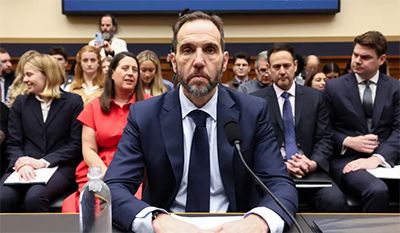
Making People Show Up and Tell the Truth
Congressional subpoena power is the authority of Congress to compel witnesses to appear, testify, and produce documents as part of its investigations. A subpoena is a legal order—not a polite request. If you receive one from Congress, you are legally required to show up, answer questions, and provide any documents requested. Refusing to comply can result in contempt of Congress charges, which carry criminal penalties including fines and imprisonment.
This power is essential to Congress’s ability to make informed laws and conduct oversight of the executive branch. Without the ability to compel testimony and documents, Congress would depend entirely on voluntary cooperation—and powerful people rarely volunteer information that might embarrass or incriminate them.
Where Is It in the Constitution?
The Constitution doesn’t explicitly mention congressional subpoena power.
Article I, Section 1 states that “All legislative Powers herein granted shall be vested in a Congress,” but it doesn’t spell out investigatory powers or subpoenas.
Instead, subpoena power is considered an implied power—a power that flows necessarily from Congress’s express constitutional responsibilities. The Supreme Court confirmed this in Watkins v. United States (1957), ruling that “the power of the Congress to conduct investigations is inherent in the legislative process.” The Court explained: “It is unquestionably the duty of all citizens to cooperate with the Congress in its efforts to obtain the facts needed for intelligent legislative action. It is their unremitting obligation to respond to subpoenas, to respect the dignity of the Congress and its committees and to testify fully with respect to matters within the province of proper investigation.”
The criminal contempt statute, codified at 2 U.S.C. § 192, makes it a crime to refuse to comply with a congressional subpoena. Each count carries a minimum of 30 days and a maximum of one year in jail, plus fines ranging from $100 to $100,000.
Where Does This Come From?
The power to compel testimony didn’t originate with the American Congress—it has roots in the British Parliament, which exercised similar powers for centuries. When the Founders created Congress, they understood it would need the same basic tools Parliament used to gather information and hold the government accountable.
The House first exercised this power in 1795, when it investigated an attempt to bribe members of Congress. Robert Randall, a real estate speculator, tried to purchase what is now Michigan from the federal government and offered to share proceeds with members of Congress who approved the sale. Randall became the first person held in contempt of Congress. The House Sergeant-at-Arms arrested him, brought him before the House, and he was reprimanded and jailed for a week.
Subpoena power for routine legislative matters evolved more slowly. In 1827, the House debated authorizing the Committee on Manufactures to “send for persons and papers” as part of an investigation into reforming tariffs. One representative denounced this as an “inquisition” that was “odious, and oppressive, in the highest degree.” But Representative Edward Livingston of Louisiana defended it, arguing that independent investigations were better than relying on voluntary testimony “by those interested to deceive.” He said, “all our laws…would be better, more stable, more wise” if the House conducted its own investigations.
Throughout the 19th century, Congress refined and formalized its subpoena and contempt powers. The criminal contempt statute was enacted in 1857, giving Congress a legal mechanism to prosecute those who defied its subpoenas.
The Supreme Court has consistently upheld this power as essential to Congress’s constitutional role. In Eastland v. United States Servicemen’s Fund (1975), the Court held that because “the power to investigate and to do so through compulsory process” is an “indispensable ingredient of lawmaking,” congressional subpoenas are generally “immune from judicial interference.”
How Does It Work?
Congressional committees have the authority to issue subpoenas as part of their investigations. The subpoena must meet three requirements to be legally valid:
- The committee’s investigation must be authorized by its chamber (House or Senate)
- The investigation must pursue a valid legislative purpose (though it doesn’t need to involve pending legislation)
- The specific inquiries must be pertinent to the subject matter being investigated
When someone refuses to comply with a subpoena, the committee can vote to hold that person in contempt. The full House or Senate must then vote on whether to adopt the contempt citation. If adopted, the matter is referred to the U.S. Attorney for the District of Columbia for criminal prosecution.
Importantly, many legal protections that apply to judicial subpoenas don’t apply to congressional subpoenas. Attorney-client privilege doesn’t automatically exempt you from testifying. Trade secrets don’t automatically protect documents. Executive privilege can be asserted, but it’s not absolute—and it certainly doesn’t apply to private citizens who haven’t worked in the White House for years.
Courts generally will not intervene to block a congressional subpoena before it’s enforced. The typical process is that a witness must either comply or refuse, face contempt charges, and then raise any legal challenges as defenses in a criminal prosecution.
When Subpoenas Are Ignored
The Trump era produced multiple high-profile examples of witnesses defying congressional subpoenas—and Congress struggling to enforce them.
Steve Bannon was subpoenaed by the House Select Committee investigating the January 6, 2021, attack on the Capitol. The committee sought testimony and documents about Trump’s actions leading up to the attack. Bannon, who left his White House position in 2017 and was a private citizen on January 6, refused to appear or produce any documents. He claimed executive privilege applied, even though he wasn’t a government official at the time.
The House voted to hold Bannon in contempt and referred the matter to the Department of Justice. In July 2022, a jury found Bannon guilty on two counts of contempt of Congress. He was sentenced to four months in prison and fined $6,500. Bannon appealed, arguing that he relied on his attorney’s advice and believed executive privilege protected him. The D.C. Circuit Court of Appeals unanimously rejected his appeal in May 2024, ruling that “willfully” refusing a subpoena means simply that the defendant “deliberately and intentionally refused to comply,” and that “advice of counsel” is no defense. The court noted that accepting such a defense would make it “exceedingly difficult” to prosecute contempt cases, since any witness could claim their lawyer told them not to comply.
Bannon began serving his four-month sentence in July 2024. He appealed to the Supreme Court in October 2025, arguing that the case “threatens the separation of powers” by imposing criminal consequences on former executive branch officials for refusing to testify to Congress. The case remains pending.
Peter Navarro, a trade adviser in the Trump White House, was also subpoenaed by the January 6 committee. Like Bannon, he refused to comply, claiming executive privilege. Navarro was convicted on two counts of contempt of Congress and sentenced to four months in prison. He began serving his sentence in March 2024. The Supreme Court declined to hear his appeal.
These cases highlight a critical problem: Even when Congress successfully prosecutes contempt, the process is slow and the penalties are relatively light. Bannon and Navarro spent months litigating before ultimately serving brief jail terms—and they never provided the testimony or documents Congress sought. The contempt power punishes defiance, but it doesn’t actually force compliance.
The Enforcement Problem
Congressional subpoena power has three enforcement mechanisms, and each has significant limitations:
- Criminal Contempt:Congress votes to hold someone in contempt and refers the matter to the Department of Justice for prosecution. But the DOJ has discretion—it can decline to prosecute. And even when DOJ does prosecute, the process is slow and depends on the courts.
- Civil Enforcement:Congress can file a lawsuit to enforce the subpoena in federal court. This also takes time, and courts are often reluctant to intervene in disputes between the legislative and executive branches, viewing them as “political questions.”
- Inherent Contempt:Historically, Congress had the power to arrest and jail those who defied its subpoenas using the House or Senate Sergeant-at-Arms. This power hasn’t been used since 1935 and is considered politically toxic today.
The practical result is that powerful, well-funded witnesses—particularly those connected to a sitting president—can defy congressional subpoenas for months or years. They can tie up enforcement in courts, claim dubious privileges, and run out the clock. By the time a case is resolved, the political moment has passed, the investigation has ended, or a new Congress has taken over.
Why Does It Matter?
Congressional subpoena power is essential to the system of checks and balances. Congress has the constitutional duty to oversee the executive branch, investigate wrongdoing, and gather information needed to write laws. If Congress can’t compel testimony and documents, it can’t perform these functions.
Consider the Watergate scandal. Congress only learned the full extent of President Nixon’s abuses because it had the power to subpoena witnesses and documents. Nixon tried to resist, claiming executive privilege, but ultimately the evidence came out—in part because Congress could compel it.
If executive branch officials can simply ignore congressional subpoenas with impunity, Congress loses its ability to conduct meaningful oversight. The executive branch becomes unaccountable. Corruption and abuses of power go unchecked. And separation of powers collapses, because one branch—the executive—can operate without any scrutiny from another.
The recent pattern of defiance is particularly troubling because it signals that the norms and legal mechanisms that once enforced congressional authority are eroding. When powerful people can defy subpoenas, serve a few months in jail (if that), and never actually provide the information Congress sought, the subpoena power becomes more symbolic than real.
What Would We Lose?
If congressional subpoena power becomes effectively unenforceable, we lose one of the fundamental tools for holding government accountable. Congress would have no way to investigate executive branch wrongdoing beyond what officials voluntarily disclose. Presidential administrations could hide evidence of corruption, illegal activity, and abuse of power without consequence.
This wouldn’t eliminate all oversight—journalists, whistleblowers, and inspectors general would still uncover some wrongdoing. But Congress is the only body with the constitutional authority and political legitimacy to demand answers on behalf of the American people. Without enforceable subpoena power, that authority becomes hollow.
The alternative is to accept that presidents and their close associates are effectively above congressional scrutiny. We’d be trusting the executive branch to police itself, with no independent check beyond what courts might impose in individual lawsuits. That’s not how the Founders designed the system. They gave Congress powerful tools precisely because they knew executives would be tempted to abuse their power and hide their abuses.
The question is whether those tools still work—or whether we’ve entered an era where defying Congress carries no real consequences for those wealthy and connected enough to fight back.


Leave a Reply